
Epiphany at Crisis.
The Fourth Service.

📖 8-minute read.
‘A man has as much knowledge as he puts into practice and as much wealth as he distributes to the poor’
- St. Francis (Admonitions)
CRISIS feels like the culture of my primary school mixed with the organisational size of the Olympics, the urgency of iPhone launch day and the logistics of the British Army. I guess that’s why I fit in there. My learning from 2025 is that I get a kick out of helping others. Like technology, volunteering can come in all sizes: small, medium and large. I have done work with Bell House which inspired my to take up two roles at CRISIS this Christmas and now I’m about to another volunteering role soon.
What I will say, is that CRISIS is not for the faint-hearted, blue-eyed or green behind the ears. Despite my being blauäugig, I am certainly no longer grün hinter den Ohren. My naïvité is thus dispelled.
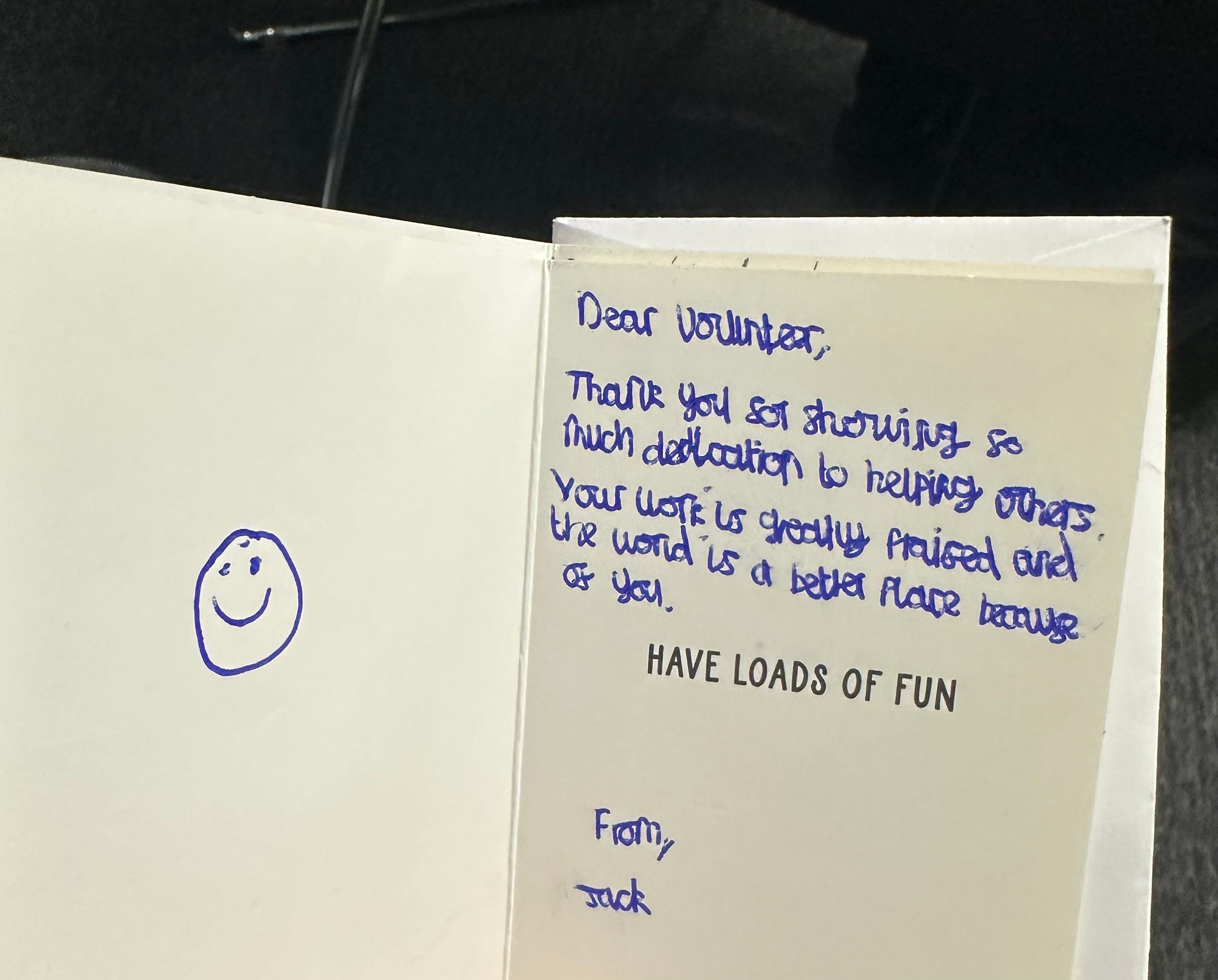
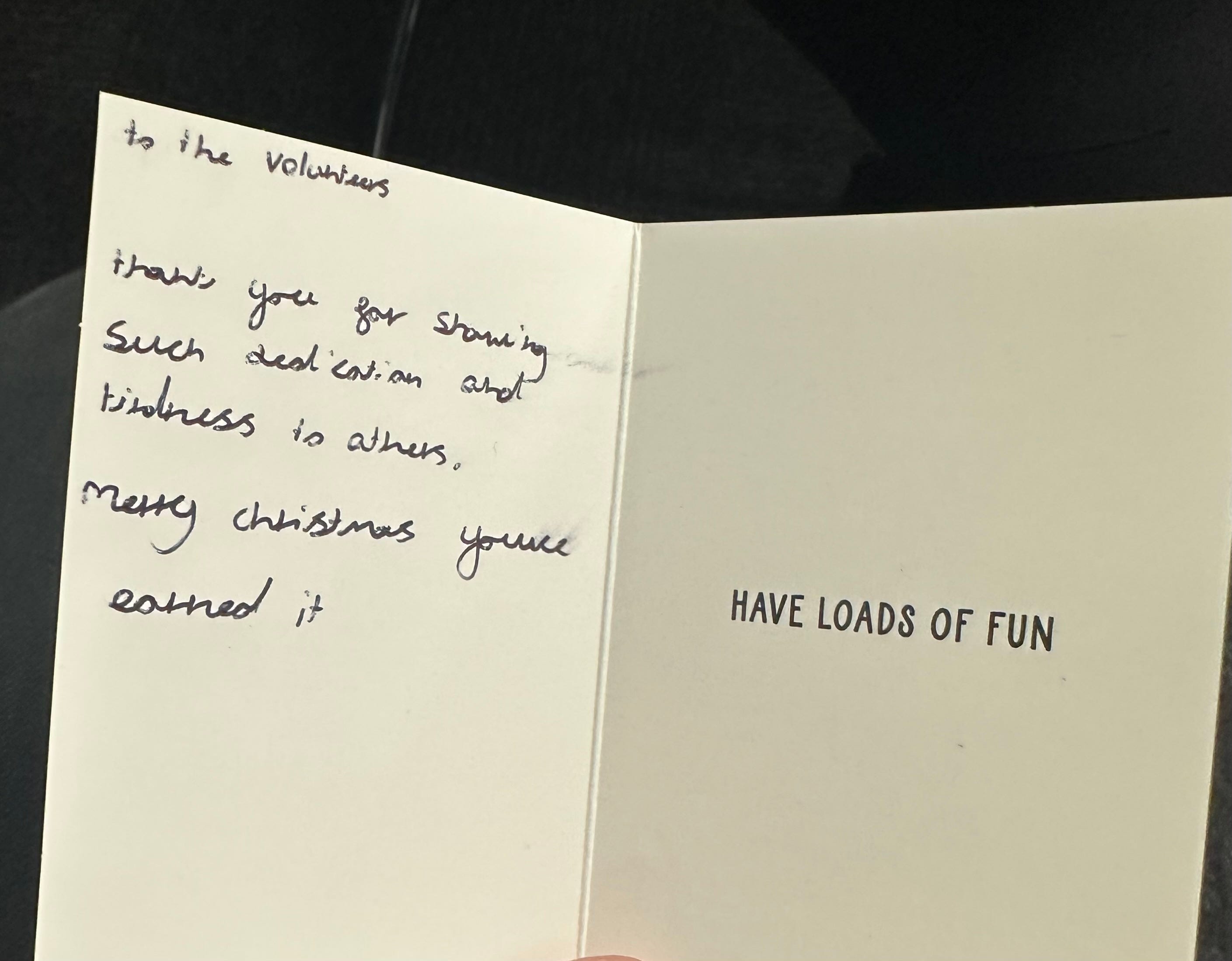
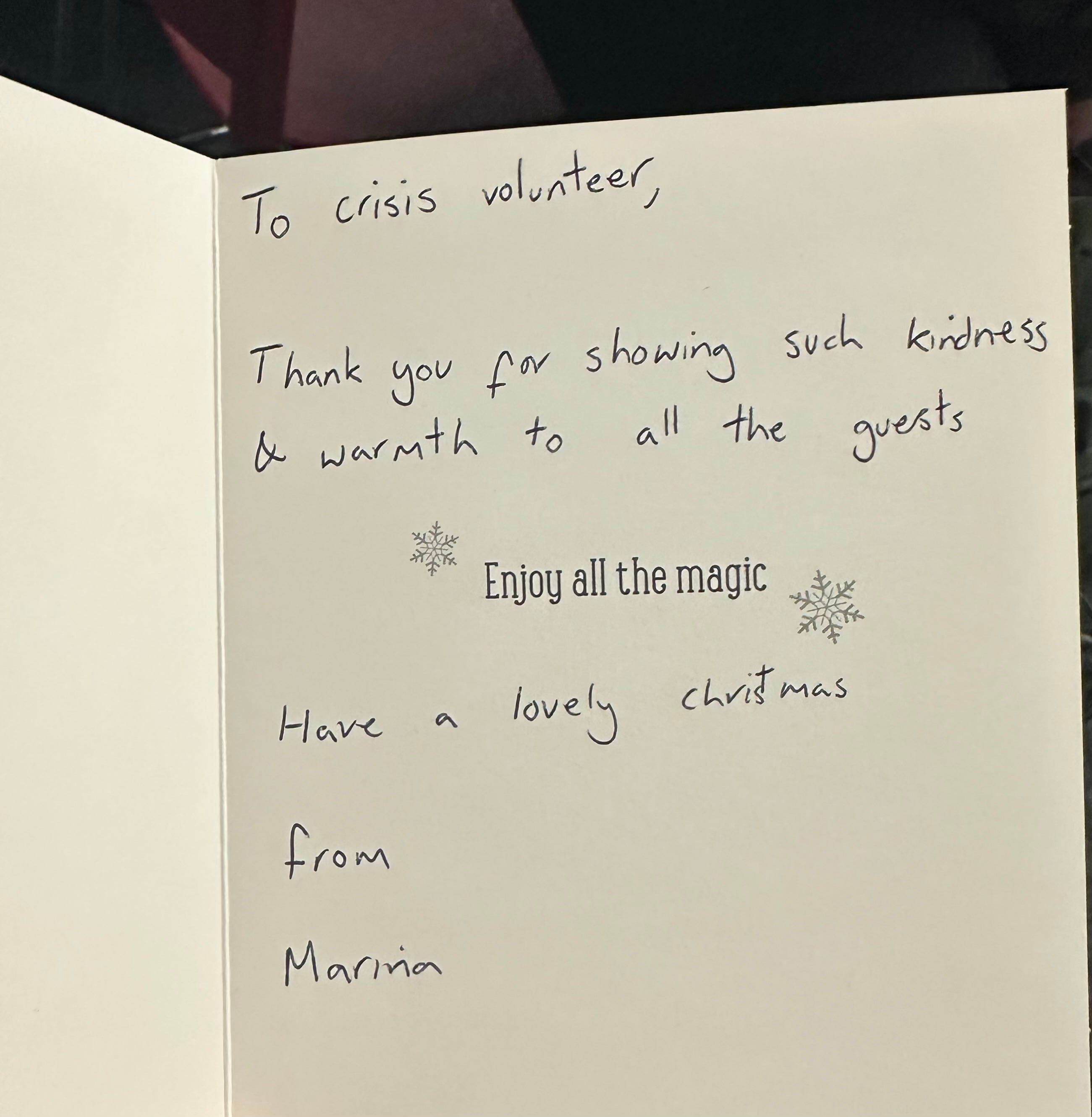
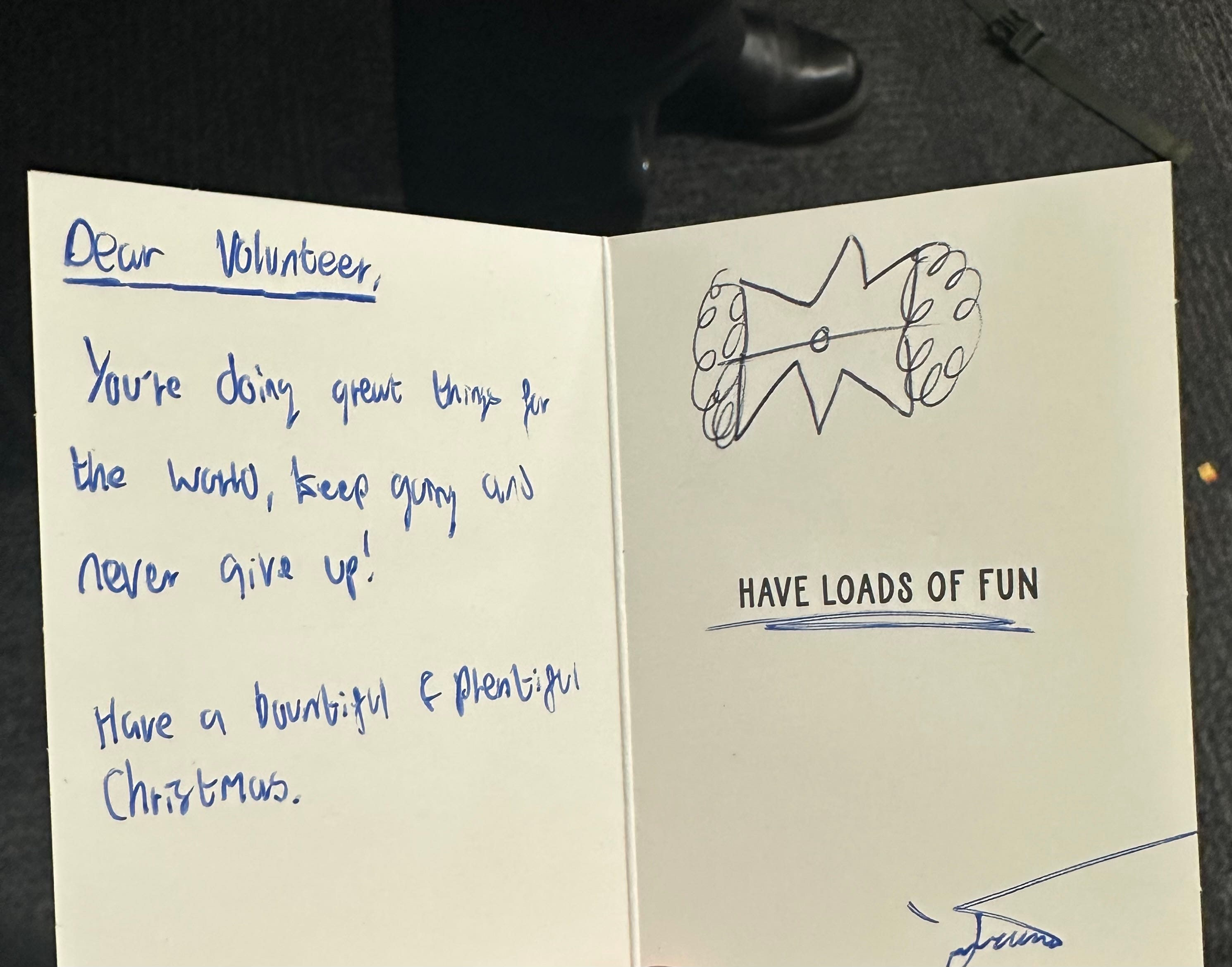
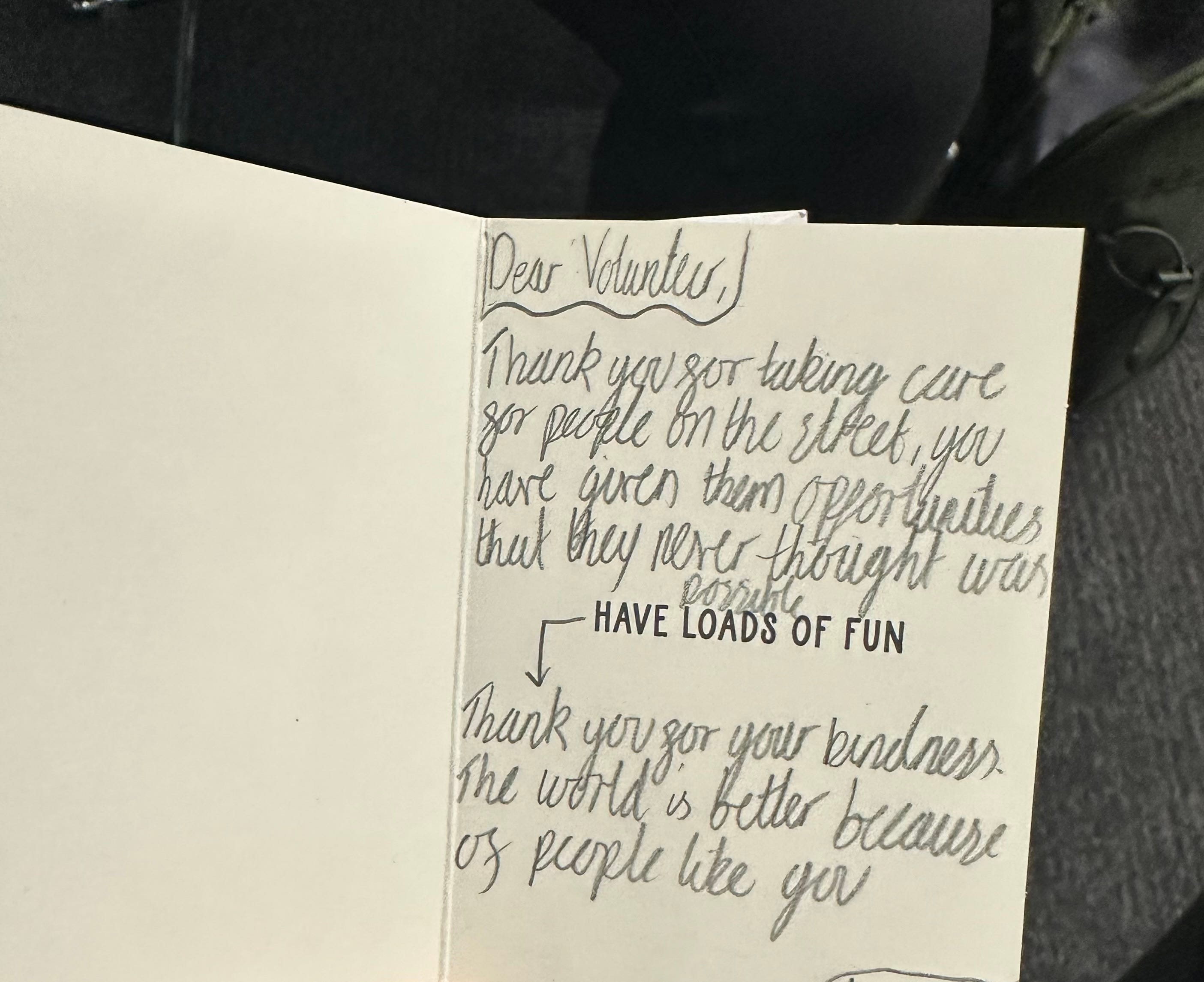
An issue for people experiencing homelessness is that they feel shut out from society and that they don’t have a voice. CRISIS is a place where they can feel looked after and listened to and try to escape homelessness for good. As one dear family member criticised over Christmas, charity is a purely selfish venture. I would question that assertion, and surely not doing charity is more selfish? You dearest readers, can decide for yourselves if charity is indeed such a selfish endeavour or not when you read the cards, peppered throughout, which were left by guests in Paddington on Christmas Day.
Rehumanisation, not dehumanisation.
The less fortunate of course get a bad rep. They’re homeless and they’re in the way. Sometimes they don’t have great hygiene and guess what: they talk back and question authority. What CRISIS’ training has taught me since volunteering there in 2017 is that we should speak about them as people - calling them people experiencing homelessness.
der Teufelskreis
It turns out, people experiencing homelessness are just like me and you. They have hands and feet. They’re human and they want autonomy and deserve tranquility or ‘respite’ as the Victorians used to refer to it as. They like comedy and to sing, they enjoy a hot shower and they like chilling with their friends and checking social media and maybe watching YouTube. What they don’t need is infantilisation. Some like a proper Christmas dinner. They enjoy camaraderie, they show humility - they’re intelligent of course, they’re streetwise and they are fluent in change because of downward spirals (inescapably, the Alemannic tribes have a harmonious melancholic word for this). They’ve been affected by changes in their life and this makes them live in the present. Living in the present is what we’re all told to do, but it can be a very dangerous thing indeed. It can sometimes be associated with addiction because if you don’t know what’s gonna happen tomorrow, you bet everything on the casino for today. They have family issues, they may have come out of prison - they may be veterans. They may have suicidal feelings and/or they may have financial problems. They may be alcoholics or substance abusers. I found them to be very human indeed and in need of our help. At the risk of sounding like our late Queen Elizabeth II in a Christmas dictum: everyone requires a helping hand sometimes.
From the heartwarming to the harrowing, prison, amputations, human-trafficking and Jihad, I’ve heard what feels like every story possible over the eight shifts of CRISIS this Christmas, including Christmas Day and New Year’s Eve - what we’d term Flagship shifts at Apple. I was volunteering at the Internet café across three hubs: Paddington, Aldgate and Docklands, helping guests to create and print out CVs or legal documents, call Universal Credit, gain access to housing benefits vis CRISIS Guest Welfare teams, acting as a translator in Russian for Ukranians and gaining access to medical care via the NHS. I also helped with IT setup and decommissioning, which was interesting to work with CRISIS’ efficient and experienced IT Partners.
When Dickens wrote about the dismal state of affairs in London in his times, I wonder if he thought that poverty would be a problem forever in London. Okay, we might not have the Workhouse any longer, but how different are Britain’s prisons and systems of living to those of other countries like Scandinavia, and how is our standard of living outside of London now equivalent to that of Bulgaria? I do feel one can measure a society’s mettle by its treatment of others. Maybe more insights will help us to help ourselves.
Homelessness as a data problem
In my mind, a few things have to change, but to stay on this topic of homelessness and housing, what I noticed was a bureaucratic black hole which many people find themselves exposed to. What I believe is required in London and the wider UK is a Fourth Service. In addition to police, fire and ambulance, the fourth service would act as a single source of truth between organisations - encapsulating a digital ID and many other services. That way, we know who these people are, we’ve been able to help guests and see we’re therefore able to give guests better help. Also we would be able to help guests quicker if we are indeed able to help and finally if we’re not able to help then we’re not able to help and then everyone’s on the same page at least.
What this should encompass is a digital ID for people experiencing homelessness. This would enable guests to gain banking access to access their residency to access passport services to access veteran care to access medical services such as the NHS to access Universal Credit, CRISIS, Samaritans to get advice from Shelter, not to mention the Salvation Army, St.-Martin’s-in-the-Fields and St. Mungo’s who could then refer automatically through an additional layer to Booking.com, airbnb.com to use the to gain legal advice to look at starting an apprenticeship to interacting with the local authority or council.
Doppelarbeit
I know this would greatly improve the service incredible charities such as CRISIS are able to give to guests and to help end homelessness for good by 2040, which is a realistic plan. It would also reduce the organisational admin on the CRISIS side and on behalf of other charities who work in this area because they would avoid doing what the Germans refer to as Doppelarbeit or ‘double work’, which they are currently doing because there is no unifying system for guests. A lot of good work has been done here during the pandemic and organisations do speak to each other.
Digital Reintegration
Of course, there would be challenges with this system. One would have to make it highly secure. Guests would need a smartphone to access this, although many have one already - not all do. Either way, I believe that the cost of a cheap smartphone and the benefit that it would lower the price of future problems, creating what economists would call a ‘positive externality’. Bringing the guests into today’s digital monoculture would actually make it economical for guests to receive a ‘goodie bag’ upon arrival, which contains a basic smartphone, charger, fresh SIM card etc. Then there could be people like myself with an Apple Store-style setup to aid them getting set up with their new phone and ID so that they could bank, purchase things - gain access to benefits and housing whilst also the authorities knowing where they are and how they can help at all times if wished of course guests would be able to opt out of this by tracking the phone so but I don’t believe they would because they would be humanised with this technology.
True leadership.
It was also great to connect with Ian Richards about the mission as CEO of CRISIS at Christmas who shares incredible stories and over the years has helped thousands of Lundin is out of homelessness and is in a way kind of CRISIS cult hero it was very inspirational seeing him on the ‘shop floor’ at Docklands - connecting with volunteers that he’d known for years and also with guests. He is an extraordinarily humble and capable figure of our society, for whom more recognition is deserved.
Worth noting for businesses is that sometimes hotels do have spare capacity at Christmas. Often, hotels have spare rooms they could donate to CRISIS, but the challenge we have at CRISIS is that we need to own and manage the entire building for Guest Welfare. To be able to offer what we do, we must operate only for guests and volunteers and not other members of the public, according to our current policy. What the Fourth Service would solve is that issue via technology. What would happen is external hotel customers who have booked into hotels would be automatically upgraded to other group hotels, so that one of the lower-star hotels could then be donated in whole to CRISIS over the Christmas period and/or January, or indeed throughout the year. Homelessness isn’t just for Christmas.
What are your thoughts on this Fourth Service? Do you think this is a good idea? Please let me know via email or preferably the comments section, and have a wonderful start to 2026. Please consider what voluntary work means to you - perhaps you are already engaged in some work - let me know what it is. Maybe you’re thinking of getting back into it and helping out in your local area. I can tell you all the years where I’ve been helping people have been a lot more fun than those where I have not and I have been lacking in recent years.
I’m profoundly grateful for this experience at CRISIS in 2025, which has shown me, once again, the true nobility of London - those who have fallen on hard times and the ones who come out to help them. The resilience and kindness which people experiencing homelessness have and also the tireless and incredible work that CRISIS (which is 90% volunteer led) does throughout the year to build up to Christmas so the guests can make their way out of homelessness. To end on some good news: Ian has announced CRISIS has now become a landlord, which is a step in the right direction, helping some London is to get the accommodation that they deserve. And thank you to CRISIS volunteers and Lifers for giving me the best Christmas and New Year’s Eve I can remember. Good luck to all for 2026.
Interesting article Marcus. There’s a curious tension that exists for some people - If I gain from, and enjoy, the volunteering experience am I really just doing it for myself and therefore it’s basically a selfish act? I guess this might be the case if you do it once to get the photo and the T-shirt but for those who have a deeper commitment I say “bring on the selfishness!”