Escape to Colditz
Old Alleynians on Tour

📖 10-minute read.
“It’s only a matter of time before we’re caught. We take risks every day, and the longer we work, the shorter the odds become against us”.
- Maj Pat R Reid.
“The object of life is not to be on the side of the majority, but to escape finding oneself in the ranks of the insane”.
- Marcus Aurelius
I absolutely despise board games. Apart from a few. Risk. Connect Four. On occasion, Cluedo, when push comes to shove. And sure… Escape From Colditz, devised by escapee Major Pat Reid. And yes, I am one of the few people in this world who has actually played the game and successfully escaped from Colditz, both in the form of ludus tabularis to the amusement of the saloon. Leafy Autumn was long upon us and a floodlit Halloween was approaching ever nearer, in a way which Generation Z could only describe as “really authentic”. In a part of the world where they genuinely believe in witches, geography is politics. Patchwork. Battlements. Floodlit beauty.
My first encounters with Colditz were via this aforesaid board game medium. Wintry nights were spent on the Isle of Wight trying to escape from a nasty old Nazi castle’s security enforcement detachment. And the board game wasn’t bad either. I remember at primary school we had a task of writing to our grandparents to find out what they did as evacuees in World War II. These are moments where you relish the Anglo prefix to Saxon.
“They who dream by day are cognizant of many things which escape those who dream only by night.”
- Edgar Allan Poe
So how did it come to be that Nazi high command had created a new old beast: The Silicon Valley of POW escapeeship? It would be reminiscent of the comedy clip by Mitchell and Webb - are we the baddies? Hermann Goering, in his most evil voice, claimed the castle was ausbruchssicher or escape-proof. We’ll see about that, Mister G!
For those who think they’re above exploring historical themes of racism, Nazism and classism outside of working hours on their holidays - shame on you all. Get a grip, man!
So, when living in Vienna and the invitation arose via the Old Alleynians to go on a guided tour of the castle before it became cemented with demented iPads and unnecessary technology, I confess I did jump at the chance, chomping at the bit. By Jove, it was fun.
„Krieg ist die feige Flucht vor den Problemen des Friedens“
(“War is only a cowardly escape from the problems of peace.”)
- Thomas Mann
Which films do Colditz remind you of? It had certainly better NOT be The Great Escape. Although belonging to the same genre of upbeat Hun-bashing post-war filmic experiences in the Anglosphere, the historians amongst you will know Colditz was Oflag IV-C and Tom, Dick and indeed Harry were tunnelling out of Stalag Luft III, natürlich. Offizierslager, not a mere Stammlager, hier please. Challenge accepted.
The Journey there.
Vienna to Prague. Walk around that medieval city of Kafka at night. Many memories of this wondrous place from a trip with university friends to Year Abroad venturings.
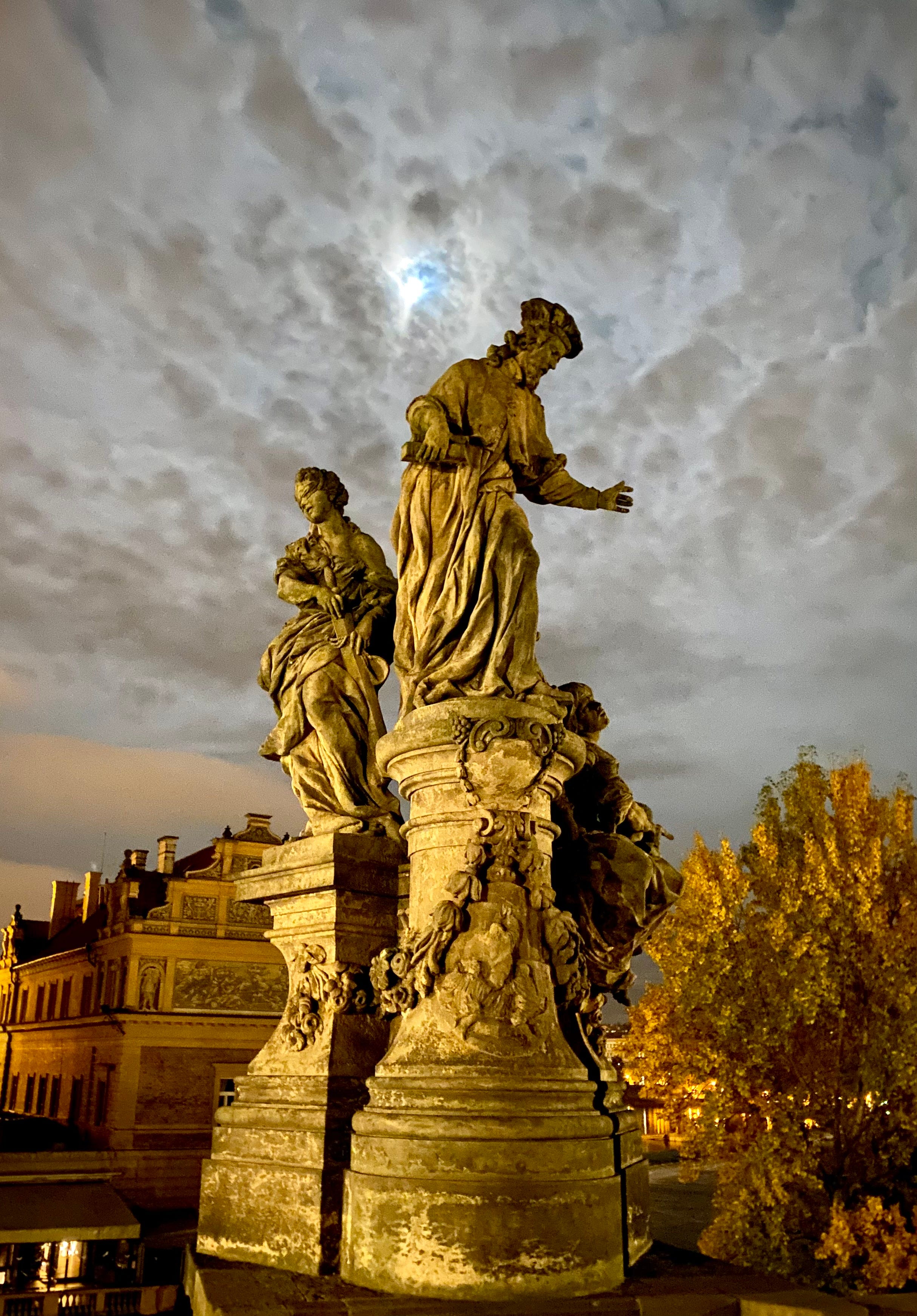
I did a walk around the bridges to stretch the old legs. Overnight, tried to comfort the receptionist who inexplicably was in tears around 10 or 11 pm. She couldn’t really be consoled, nor did we have the language capacity; she said she was fine eventually. I think she was just tired as hell. It was late. I lifted up to the top floor, where my mediocre loft room awaited me.
In the morning train, I navigated the unGermanic, disorderly and unnecessary complexity of Prague’s Hauptbahnhof. I clambered aboard my train. As we departed, a monk waved a naughty goodbye to his Mrs, who flustered on lovingly from the platform. I found out monks in CZ are not allowed to do the old nuptials. But this one seemed to think the rules didn’t apply on weekends. The bald-ish monk grinned this to me as he set about merrily drinking red wine through stained ivory teeth and repeatedly looking over his shoulder and then smashing his right hand on the table so it vibrated the window and reverberated my sandwich for a time. There was some point which I had missed to his joke, which lay undiscovered in the ruins of his broken English. He was en route back to the HQ, aka the monastery. No women allowed, apparently, in the Czech church, hence resorting to being an all-out bad boy at weekends, having a girlfriend on the side. Tut, tut! So it’s not only the Brits who get a bad rap in the town; the natives are at it, too!
“All the great mischiefs of the world have originated in France.”
- Duke of Wellington
Exit the train at Dresden. One missed call from an unknown number. It’s Mohamed. BlahblahCar is a new, French and totally inferior version of that pithy German word for lift or ride: “Mitfahrgelegenheit” - the antiquated webpage who remember the old days. It was a long-distance ride-sharing app payable via cash only in Germany, almost a Craigslist of journeys. Incredible website. It enabled me to see all my friends and the entirety of Germany in 2012-2013. Forays into these parts of Germany can be fraught with a lack of public transport - Blankenburg 2013. Check it out for those interested.

Mohamed and Hanin and their delightfully well-behaved cat were waiting for me in a nearby car park in a small blue VW. Shway’e-shway, I could practice a touch of Arabic. We got to know one another and had a great chat, mainly in German, of all languages. They’d been here a couple of years. We thundered towards Central DE. It was then I found out that Palestinians kept their keys from their old homes, even if they were destroyed. This acted as a symbol that they would return and build. I should say, this trip was in October 2023, for colour. Pouring rain, I said shukran to my Palestinian newlywed friends and gave them their hard-earned cash and a bit extra for taking me off the route. So the Palestinians had smuggled me down the Autobahn from Leipzig to Colditz. I had landed. I called Richard. The Eagle had Landed. Would my old colleague from the BMW days, Tilman S., be right to scoff that this was the “most British tourist” thing to do here? He probably wasn’t wrong.
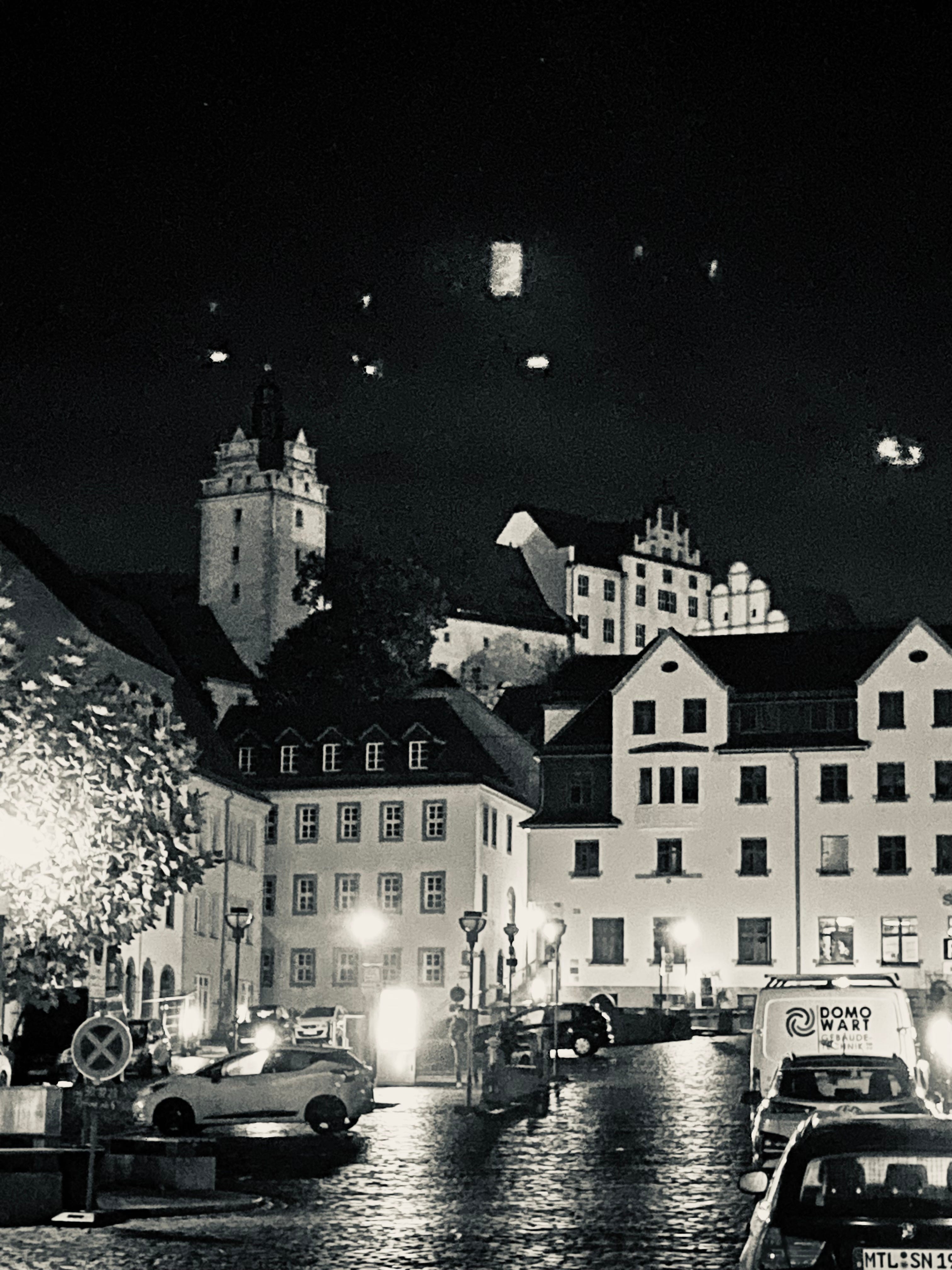
The imposition of the castle onto the town centre is a sheer understatement; it has to be seen to be believed. I shuffled along the cobbles in the general direction of the restaurant where the others were gathering. The mystique of the military hobby historian.
Offizierslager
Dinner with the chaps at Schlosswächter - highly sumptuous grub. Colditzer Pilsner was flowing. Even the famed local Hasseröder was on offer. After we’d taken our fill and been briefed by Richard, we were considered to be combat-ready. Then we meandered over to Pension zur Alten Stadtmauer. A dark, kindly place belonging to Herr Gorny, a battered old local Anglophile who’d seen better days, but remained proudly pickled in the greatest of spirits, quite literally, I suspect. He was one of those chaps who’d travelled about a bit and had the motorbike stickers to prove it. You get the picture. We were well looked after and myself and Richard stayed up late on beers and smoking cigarillos, I believe, which seemed necessary at the time. We both appreciated the company and it was great to hear his Dulwich and life plus Colditz stories. Then it really was time for bed.
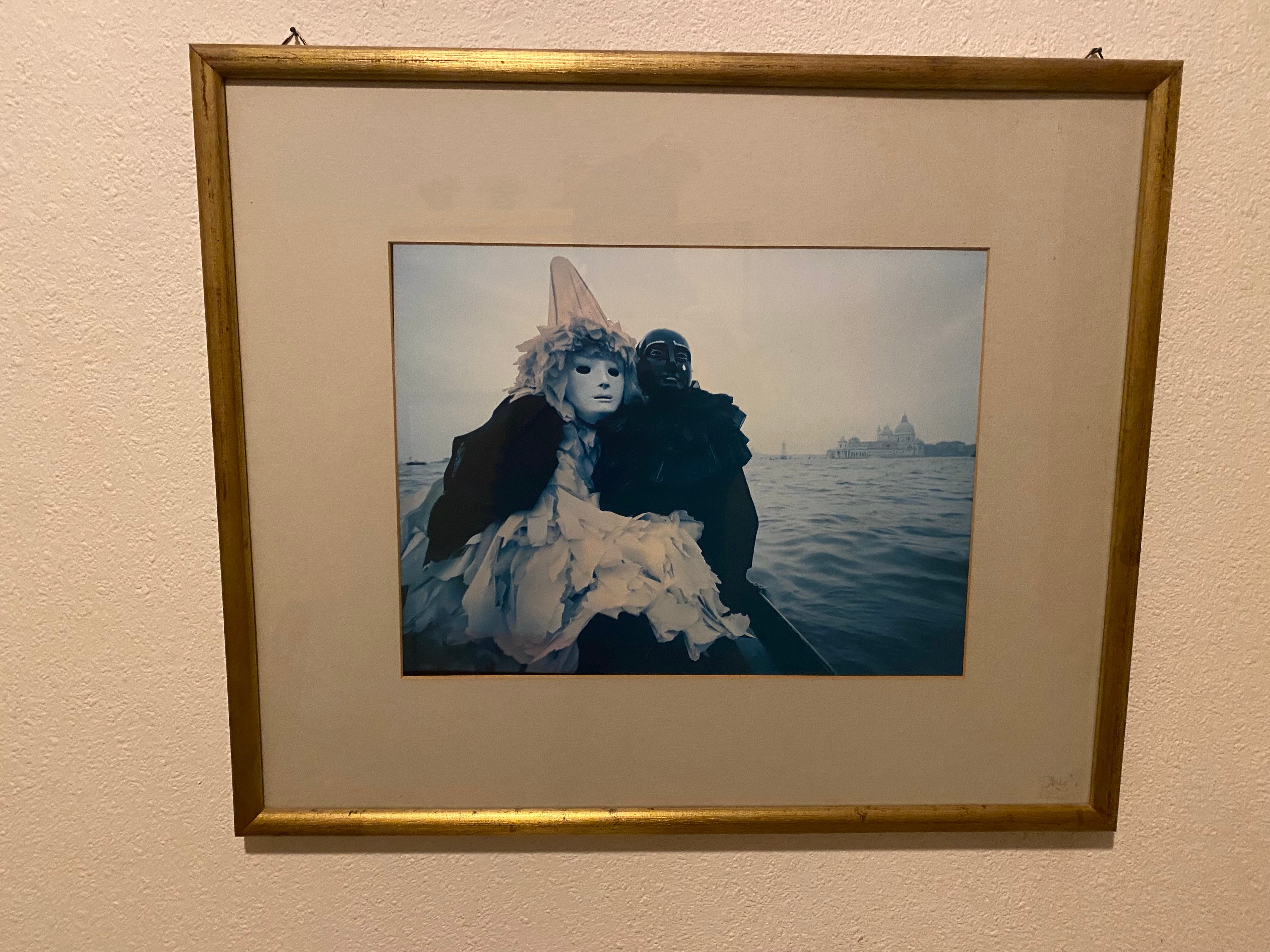
I had slept fairly well despite the slightly troubling imagery and interior design, see above. It was a bright morning and we cheerily breakfasted six to a table in the dank room with adorably selected attempts at English breakfast, though in the poorly preserved German style, the cheese had seen better days. Still, who can turn down a boiled egg, right? Some of the horrors had only just begun.
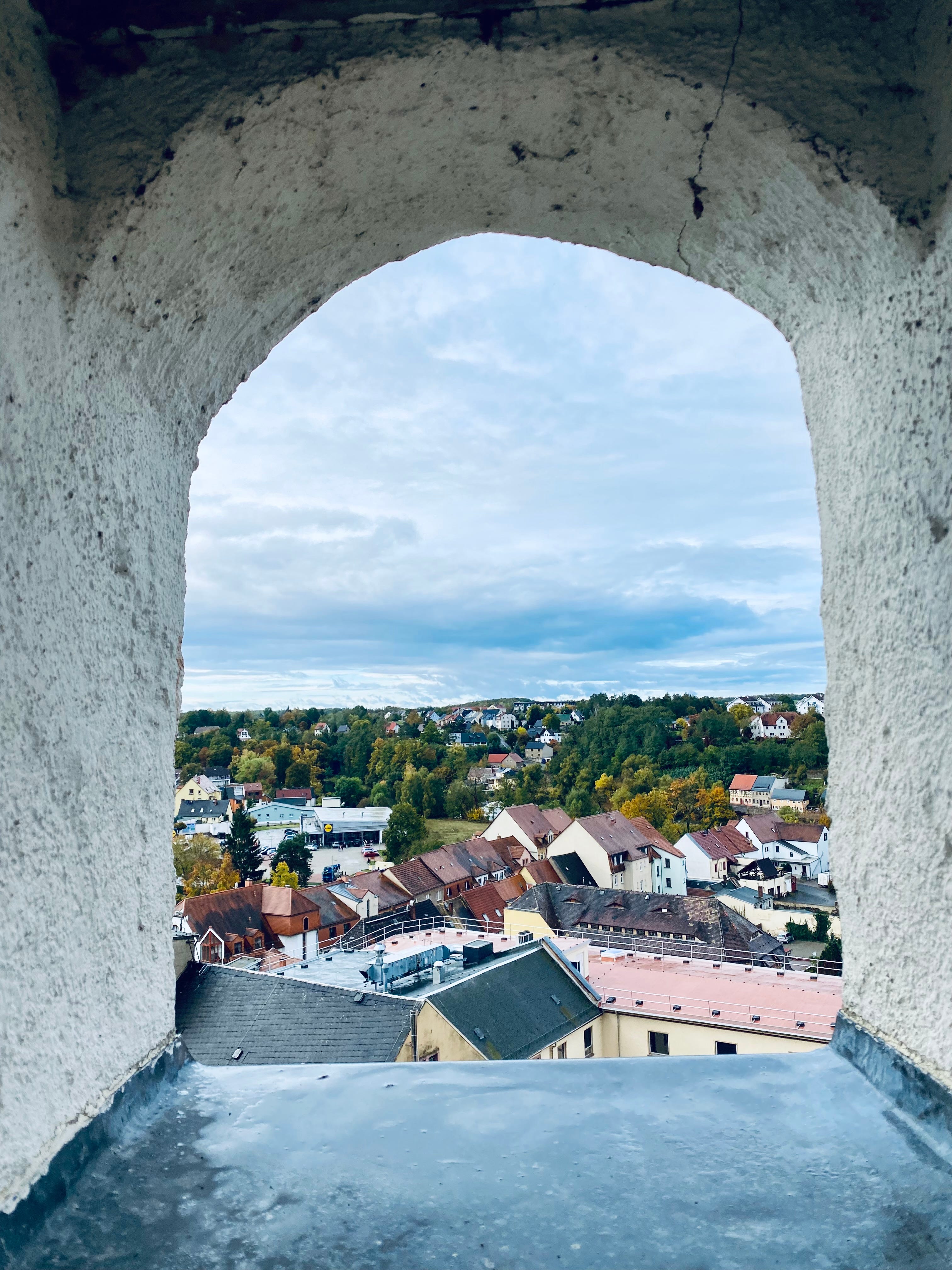
And so the castle tour began, by a Polish bloke who had lived in Hull. I attempt an overview of the most interesting themes. If you don't want to spoil your next trip, do not read on! My knowledge is a combination of the visit and the HistoryExtra podcast, which I recommend: Listen on Apple Podcasts:
A touch of celebrity
Prominenti at Colditz included: double-amputee Douglas Bader whose aircraft had been downed for a second time, Sir Archibald David Stirling who would later found the SAS. He was captured as a POW in 1943 and had five escape attempts before being sent to Colditz. Extraordinary scenes.
Churchill, Julius Green and MI9.
Formed on the 23 December 1939, MI9 or Military Intelligence, Section 9 was a specific unit set up to assist troops in escape and evasion tactics. They supplied endless money, documents and smuggled resources into the castles across the Third Reich. The only problem was, you had to get there first. Switzerland and the Pyranees to Spain and Portugal were the only real options for Colditz escapees.
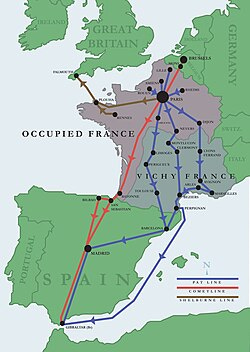
As an officer, it was one’s duty to escape. Colditz was intended to house all the Allied troublemakers so as to contain leadership in one place. In some sense, it was a kind of proto-European Union of officers from Britain, Poland, France, Belgium, Holland and of course the US as the exception. There’s also a tribute for the plausibly deniable central European tourist: a plaque decrying the awful time when the nobles got sent to the island of Rügen. From housing Polish nobles to a hostelgoers funded by the EU, of all people. It wasn’t all rosy, though: Anti-Semitism persisted and was present even among French officers who refused to be housed with fellow French-Jewish officers, sadly, to the outrage of some or most of the British. The Indian doctor, Birendra Nath Mazumdar, also experienced prejudice and was treated unfairly at times.
The castle was run by one Reinhold Eggers, an old school Prussian military man and Anglophile who taught in Cheltenham. One wonders if he brought Colditz to Cheltenham. Or indeed - one can’t help but wonder - if a bit of Cheltenham came to Colditz.
World War II was, in many ways, the last gentlemanly war. Hierarchy mattered during capture, and officers were treated with slightly bizarre levels of chivalrous respect. Churchill’s nephew and Daily Express journalist was also in interned here: Giles Rommely. Airey Nieve was arguably the most high-profile escapee who squeezed out through the floorboards of the theatre. Later, he would be tragically assassinated by the IRA. Not before being an advisor to Thatcher, however.
The fairer sex at Colditz
Women played an important role in wartime Colditz. Jane Walker, Mrs M (a Scotswoman who posed as a Polish housewife via MI6). Irmgard Wernicke - the dentist in town - passed vital information to the British and was a fervent communist; it just so happened that her father was a senior officer at the Castle, whom she was keen to rebel against.
Prisoners even organised their own Olympic Games, which they then didn’t take seriously, to the frustrated confusion of guards. We came last. Thank you to the illustrious and esteemed Richard Vero for organising and always carrying his folder of artefacts with him! What he may lack in glamour, he more than makes up for with Colditzer enamour.
Present day - the Naumann Crime Syndicate.
Charmingly, Colditz continues to have drama in the present day with links to the far right as well as organised crime. They’re people so racist, they would say Key Lime Pie sounded like a peninsula dictator of East Asian extraction. One clan member, was allegedly a Lamborghini and Hummer-racing narcotraficante del mundo going to jail after large amounts of crystal meth and plant paraphernalia were found at their Holzfabrik. Redacted to family N. For their privacy in this video. Prison’s in their blood, I guess. If you don’t believe me, check this out.
“It is vain for the coward to flee; death follows close behind; it is only by defying it that the brave escape.”
- Voltaire
We toured the brewery and also had coffee and cake in town, all the while I was privileged to be surrounded by OAs and their military friends who were true historians and put me to shame in this regard - I learned a lot. Then it was time to say our goodbyes. It was a great OA trip. I have always adored a trip, a museum and a history walk. Something I get from my dear mother. Colditz was all of those things rolled into one. It did not disappoint. Despite all this, as clouds appeared and Dresden was calling, I was happy to be on the bus out of that place. And so, in keeping with tradition, my adrenaline rose as my tickets were checked. Dear Gothic Boarding School, see ya later - take that, Goering!
What did I learn? What is Colditz?
Colditz was a proto-EU, but not, but then it does have an EU-funded hostel within the castle walls. Colditz was ausbruchssicher, but not. Colditz was gentlemanly, but also not always - not to the Indian doctor and not to the French-Jewish officers. Is it just that we in the Anglosphere enjoy the fact that we won, and so there! It’s a safe topic to engage with World War II, because it was just a big concrete pen for naughty boy officers to escape from. Maybe what we can glean from the myths of Colditz are about more than the myth itself. Colditz was a study in human initiative under constraint. Colditz was about initiative. Colditz was the old midwife to Thatcher’s strategies and the British Special Forces. Colditz was democratic; the officers voted on a committee. Colditz now is populist, that etymological cousin of democracy.
Perhaps it is the potency of the moving myths of Colditz that - to this day - keeps the Colditz community coming back. We want to believe it. Perhaps it’s how we compartmentalise the horrors of the follow-on to the Great War, caused by rampant inflation and the fear of the spread of communism following the Russian Revolution, that catalyst origin story of the 20th Century, without which much may have differed. And now we have encouraged that pagan religion: overt wokeism, the worst of all possible outcomes! The Frankenstein freak of communist values with fascist implementation.
Prepositionally, I certainly found an Escape at Colditz, Escape in Colditz, Escape from Colditz - Escape to Colditz. Escape surrounding Colditz. The thought lingered: how would I have escaped? Well, I had passed for a local at the pub on night one. Check. And in the café. Check. And on the tour (ok that doesn’t count to be fair). One thing is for certain: a budding 14-year-old Germanist Marcus would be proud and disbelieving of my now symbiotic Saxon skillfare; I could guffaw with the best of the locals who would voice recognition, as did my compatriots. What more could you possibly want? I’d have probably just strode out uniformed doing “a bit of a Prince Harry”, have had a couple of beers in my impersonation before leaving the castle on watch with other guards, then commandeered a vehicle, be it bike or truck. How so, I hear you say? Well, perhaps language would have been my escape. After all, unlike our Airey Middleton Neave, I learned my Deutsch at Dulwich under Pavey, Jepson and Read.